KAMPALA, 14 August 2026 — Muni University is taking higher education beyond the traditional classroom and into refugee-hosting communities, using skills development, financial inclusion and market linkages to help thousands of young people transition from learning to dignified and fulfilling work.
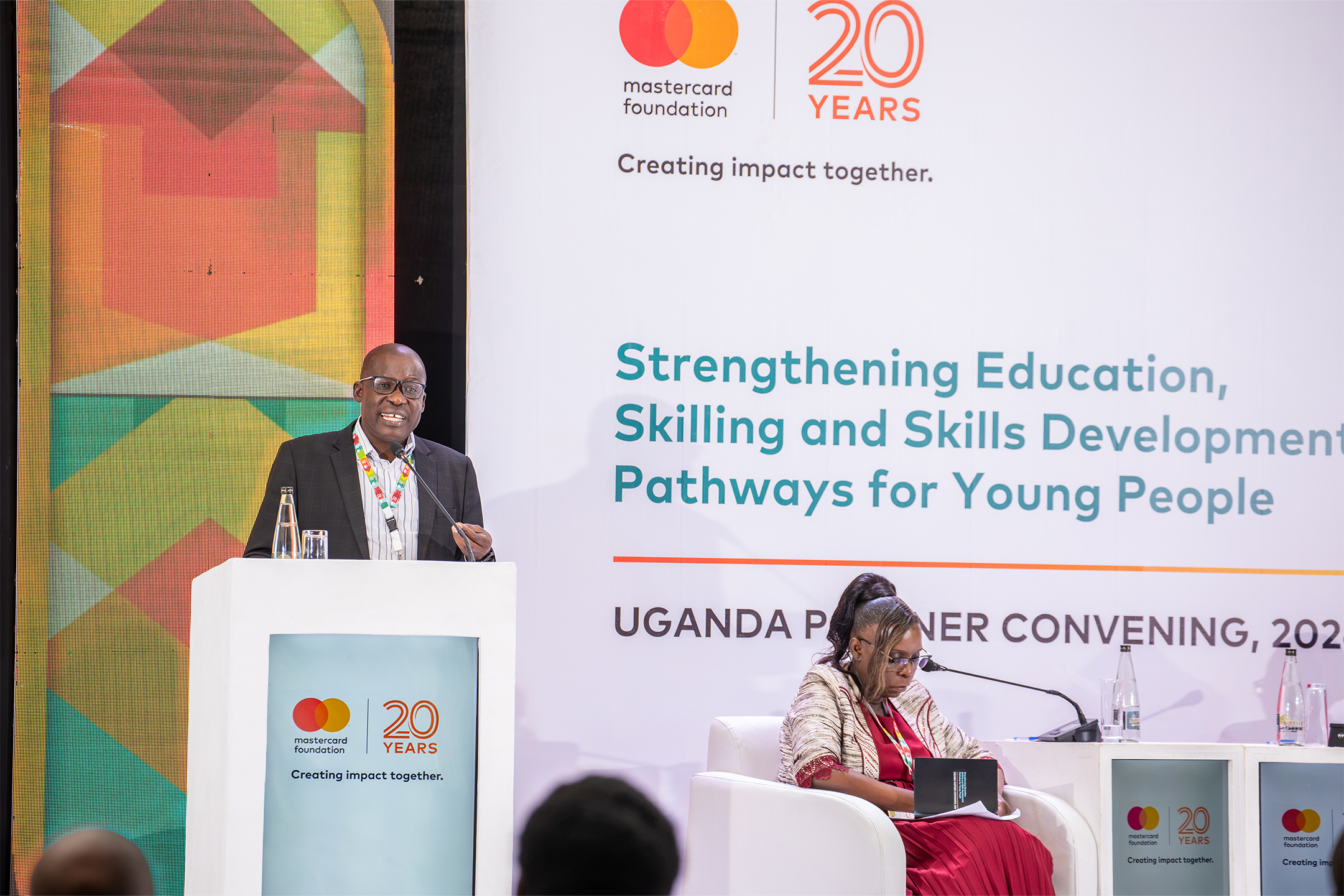
This was the message delivered by Assoc. Prof. Clement Okia, RETI Program Coordinator, at the Uganda Partners Convening 2026 in Kampala, where he showcased the impact and emerging lessons from the Refugee and Host Community Youth Empowerment and Transformation Initiative (RETI).
Presenting under the convening’s focus on strengthening education, skilling and skills development pathways for young people, Prof. Okia described RETI’s central innovation as “taking universities to communities” — bringing practical, market-relevant skills and other support closer to young people in refugee-hosting areas rather than expecting them to come to university campuses.
RETI is designed to equip 80,000 refugee and host-community youth with market-relevant skills, with 70 percent targeted to transition into dignified and fulfilling work by 2027. The programme targets 70 percent refugees and 30 percent members of host communities, while placing particular emphasis on inclusion, with 60 percent of beneficiaries being young women and 3 percent young people with disabilities. The programme covers 12 refugee-hosting districts and three cities.
From Learning to Earning
Prof. Okia explained that RETI is moving beyond the conventional approach of equipping young people with skills and leaving them to find their own way into the labour market.
Instead, the programme is built around Linking Learning to Earning (LLE) — connecting skills development to finance, productive assets, markets and employment opportunities.
Its interventions include skilling young people in market-relevant trades through community-based local artisans and university short courses; facilitating access to finance through Youth Savings and Loan Associations (YSLAs), FinTechs and financial institutions; and providing innovation grants, start-up kits and incubation support.
The programme also creates pathways to markets through digital platforms, internships and private-sector engagement, while strengthening community engagement, safeguarding, inclusion, financial management and monitoring and evaluation systems.
This integrated approach recognises that skills alone are not always enough to secure livelihoods. Young people may have the technical ability to work or start businesses but still lack access to finance, productive assets, markets and industry connections — challenges that RETI seeks to address simultaneously.
Bringing Universities Closer to Communities
A key feature of RETI is its partnership model, which brings universities together with international and national NGOs, local actors and the private sector.
The programme also leverages young community-based local artisans as part of the skills-development model. These artisans serve not only as trainers but also as role models who can demonstrate practical pathways from skills acquisition to work and enterprise.
Prof. Okia said the strategic partnerships have helped accelerate the process of taking universities to communities, while also contributing to increased visibility and enrolment at participating universities.
The RETI consortium brings together Muni University, Gulu University and Bishop Stuart University, alongside six NGOs: Finn Church Aid (FCA), DanChurchAid (DCA), Community Empowerment for Rural Development (CEFORD), PALM Corps, Meeting Point Kitgum, and Young African Refugees for Integral Development (YARID).
Inclusion at the Centre
The initiative is also generating important lessons about how skills programmes can become more inclusive.
According to Prof. Okia, the use of Disability and Inclusion Facilitators (DIFs) has increased the participation of young people with disabilities, while the provision of childcare services has improved enrolment, participation and completion rates among young mothers.
The programme has further found that combining skilling with targeted support — including access to finance, productive assets, innovation grants, start-up kits, family support, certification and business development services — can accelerate young people’s transition into work.
Addressing the Barriers to Youth Employment
Despite the progress, Prof. Okia noted that access to finance remains a major constraint to young people’s transition to work.
The programme also faces limited private-sector presence in some refugee settlements, restricting business and employment opportunities. The mobility of refugee youth presents another challenge by making follow-up and tracing beneficiaries more difficult.
At the same time, RETI sees opportunities in strengthening government and private-sector linkages, supporting skilled refugees who move out of settlements, and working with community-based artisans to provide skills, role modelling and pathways to employment.
Scaling What Works
Looking ahead, RETI is calling for greater emphasis on interventions that support young people after training, particularly access to finance and markets.
The programme is also prioritising stronger evidence and documentation through tracer studies and research on impact beyond beneficiary numbers, with the aim of generating evidence that can inform the adoption and scaling of successful models elsewhere.
For Muni University, RETI demonstrates a changing role for higher education — from institutions that primarily provide learning within campuses to institutions that actively work with communities, governments, development partners and the private sector to solve real socio-economic challenges.
By taking universities to communities and linking learning to earning, RETI is helping to build pathways through which young refugees and members of host communities can move from skills acquisition to financial inclusion, entrepreneurship, employment and sustainable livelihoods.