In December 2015, violence erupted between government forces and the opposition SPLA-IO, forcing Betty Kita and her family to flee their home in Juba, South Sudan's capital. They walked for days to Uganda on foot, carrying only a few belongings, before eventually settling in Maaji Refugee Settlement in Adjumani District. Betty was just a girl who had completed Primary Seven and at the time, she believed her future had been lost.
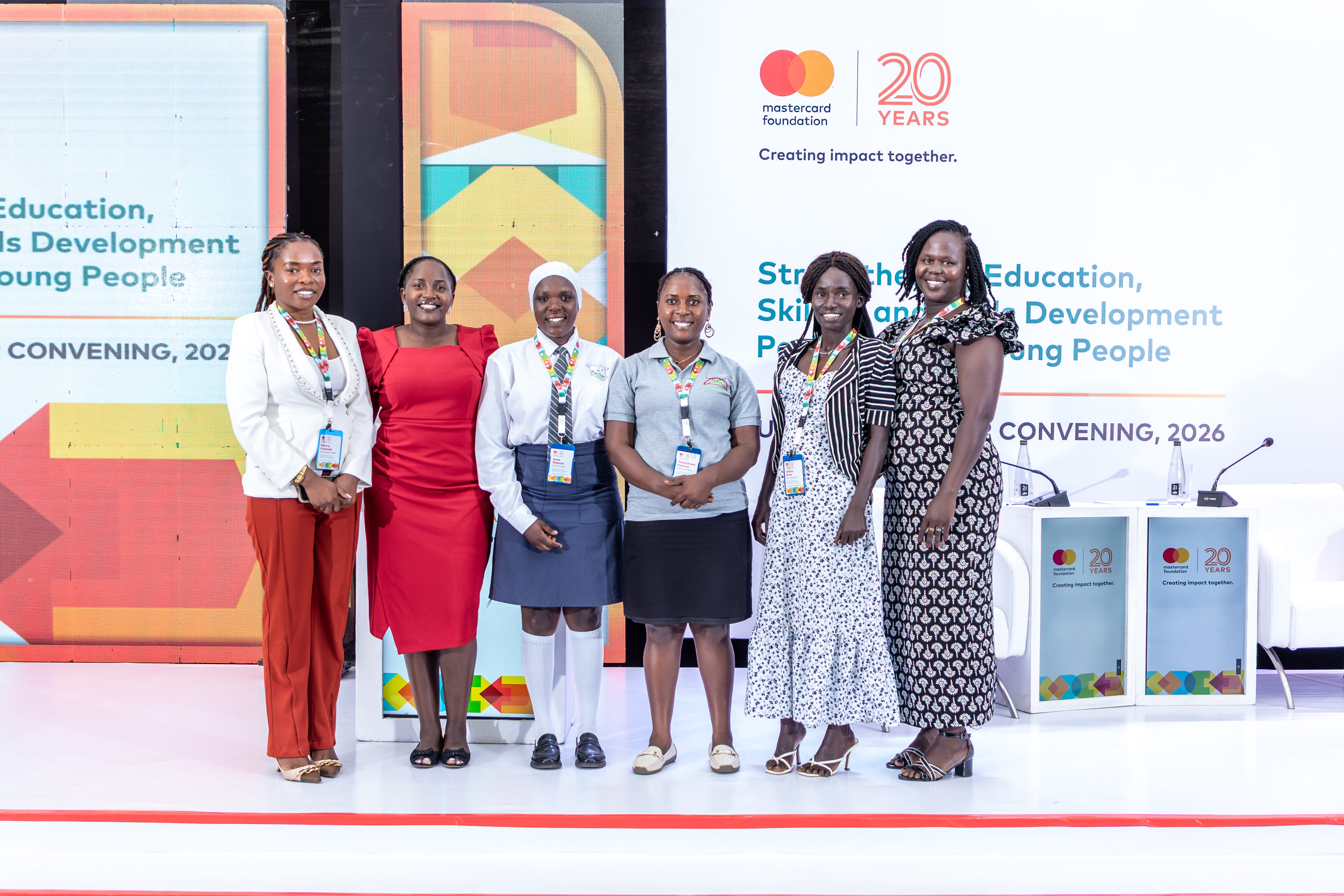
More than a decade later, dressed in a black and white floral-patterned dress and beaming with confidence, Betty Kita stood before leaders and decision-makers at the Mastercard Foundation's Partner Convening in Kampala and told a very different story: one of a young lady who now owns a thriving hairdressing business, runs a mobile money enterprise, employs three young people, has bought her own plot of land, and pays her sister's nursing school fees.
"I never imagined that a girl who only completed Primary Seven and fled conflict would one day address leaders and decision-makers from across the country and beyond," she told the audience.
A Family Torn Apart by Conflict
Betty's father was a soldier in the then war-ravaged South Sudan. When he was killed during the civil war between government and opposition forces, the family lost its only source of income. Her mother, who had never attended school, survived by washing clothes and baking bread, a work that a young Kita joined, selling bread around town to help make ends meet.
Even after reaching safely in Uganda after days of trekking, life remained a daily struggle for Kita. The family could barely meet its basic needs, and Betty had to drop out of school so she could help her mother support her younger siblings.
A Turning Point
Everything changed in 2024, when Kita learned about the Refugee and Host Community Youth Empowerment and Transformation Initiative (RETI), a program led by Muni University in partnership with the Mastercard Foundation.
What struck her most was that the training came to her. "I did not need transport to participate," she said. "That simple decision removed one of the biggest barriers facing young women like me."
Betty chose to train in hairdressing with PALM Corps, one of the RETI consortium partners, having noticed how far people in her community often had to travel to Adjumani Town just to access salon services. But the program gave her more than a trade.
"The training gave me much more than technical skills," she said. "It restored my confidence and showed me that I could build a future despite missing out on formal education."
After graduating, Kita was mentored by her trainer, who gave Kita the chance to earn money while she built her experience. "She believed in me before I fully believed in myself," Kita said.
Building a Business, One Investment at a Time
The RETI program also introduced Kita to the discipline of saving. Through a savings group, she borrowed UGX 500,000 and opened her own salon. Later, an innovation grant worth UGX 50,800 from PALM Corps allowed her to buy a generator, an investment that let her expand her services and grow her income.
From there, her success compounded. Kita now owns and runs a growing hairdressing business, runs a mobile money business, has purchased her own plot of land in Adjumani Town, employs three young people, and trains other youth as an artisan. Above all, she pays school fees for her younger sister, who is studying nursing.
Through Her Mother's Eyes
Kita's transformation has rippled through her entire household, a change felt most directly by her mother, Joyce Bangajoru, who raised Betty and her siblings alone after losing her husband.
"Because of the skills you people have given to my daughter, I can eat breakfast, lunch and supper," Joyce said. "The change you people brought to my home is better than the food ratio that I have been receiving from World Food Program," Bangajoru noted.
How RETI Is Transforming Refugee and Host Community Youth Livelihoods
Kita's transformation is one story within a much larger initiative. The Refugee and Host Community Youth Empowerment and Transformation Initiative (RETI) is led by Muni University in partnership with the Mastercard Foundation.
RETI aims to equip 80,000 refugee and host community youth with market-relevant skills, with 70% of participants transitioning into dignified and fulfilling work, across 15 refugee hosting districts by 2027.
RETI is delivered through a consortium that brings together three universities, Muni University, Gulu University, and Bishop Stuart University, and six NGOs: Finn Church Aid (FCA), DanChurchAid (DCA), Community Empowerment for Rural Development (CEFORD), PALM Corps, Meeting Point Kitgum, and Young African Refugees for Integral Development (YARID).
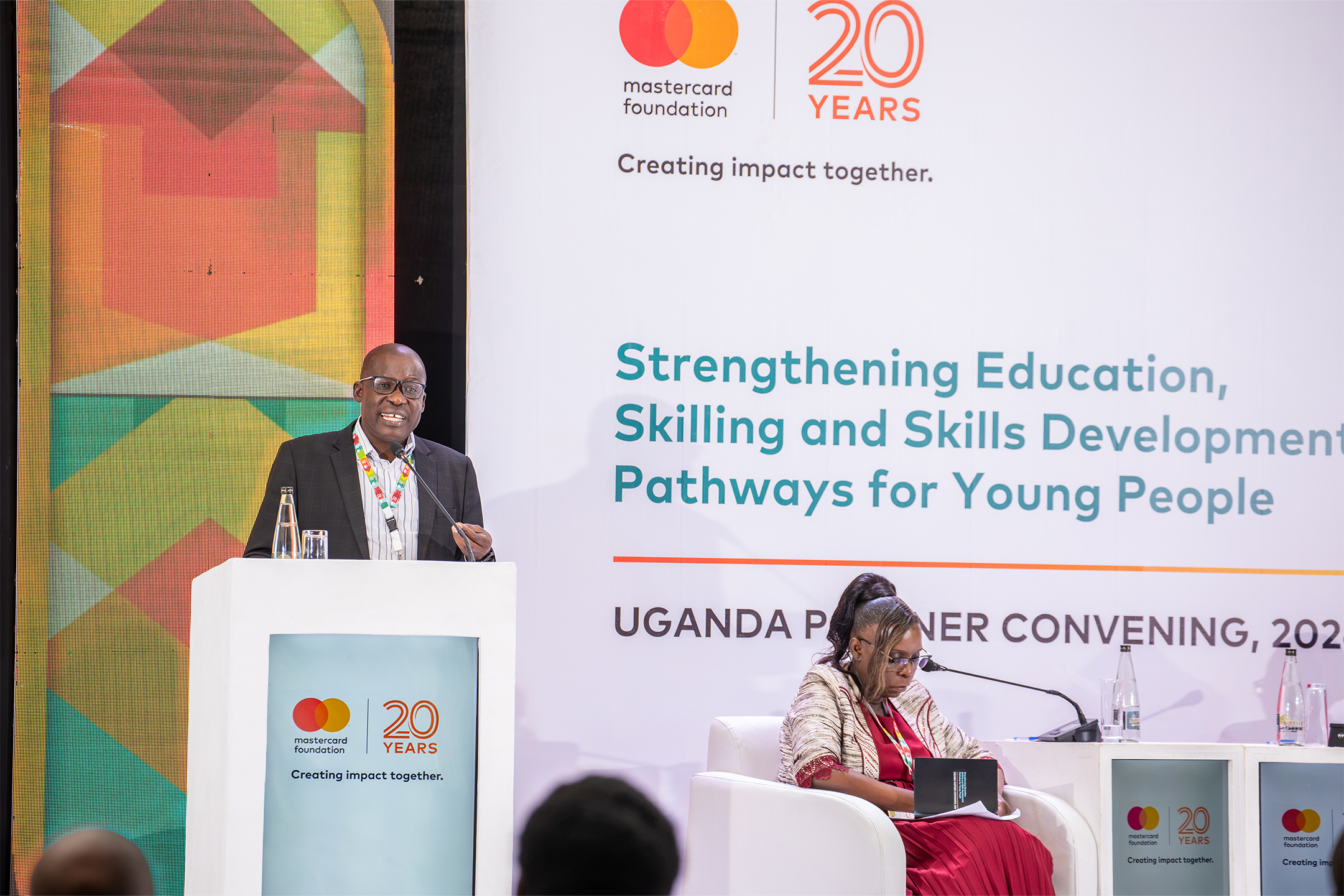
Mastercard Foundation Partner Convening 2026
Betty Kita shared her story at the Mastercard Foundation Convening Event held in Kampala on 14 August 2026.