Introduction
The Muni University Library Week Celebration was successfully held from 2nd to 4th March 2026 to promote awareness and utilisation of library resources and services among staff, researchers, and students. The event provided an opportunity for participants to engage with emerging trends in scholarly communication, research support, and academic publishing. Key training sessions focused on research support services, bibliometrics for research management and evaluation, and publishing options. Muni University Library Week is an annual event organised by the library department as part of the outreach program to extend information services to the university community and the external community. This is in line with the university's mission to promote community empowerment for transformation.
Objectives of the celebration
The Library Week Celebration aimed to:
- Increase awareness of library services that support teaching, learning, and research.
- Enhance participants' understanding of research impact measurement and evaluation.
- Guide scholarly publishing opportunities and best practices.
- Strengthen collaboration between the library and the research community.
Activities for Library Week 2026
Training session 1: Electronic library resources for learning and research
The first day featured a virtual training session covering electronic library resources for learning and research. The session aimed to introduce the participants to a range of e-resources subscribed to by Muni University. The resources included eBooks (EBSCO, Taylor & Francis, Research4Life, in-house collection); eJournals (subscribed databases); and open access resources. This session was facilitated by Moses Osamai, Boniface Agungi, and Moses Samanya.
Training session 2: Research support services (AI tools, creating researcher profiles, etc.)
A training session on research support services was conducted to familiarise participants with the range of services offered by the library to support the research lifecycle. The session was facilitated by Dr. Martha Lyaka from the University of South Africa. It was attended by 28 participants. Key areas covered included literature searching and systematic review support, reference management tools and citation assistance, research data management practices, academic integrity and plagiarism awareness, research visibility and dissemination strategies, and creating researcher profiles on different academic social platforms like ResearchGate, Academia, LinkedIn, etc.
Outcomes
Participants gained a better understanding of how library services can facilitate efficient research processes and improve the quality of scholarly outputs. The session also highlighted the library's role as a partner in research and innovation.
Training session 3: Bibliometrics for research management and evaluation.
The second training session focused on bibliometrics and its application in assessing research performance and impact. Key areas covered introduction to bibliometric indicators, citation analysis and impact measurement, author-level metrics such as the h-index.Journal metrics including Impact Factor, CiteScore, and SCImago Journal Rank (SJR), research performance evaluation at individual, departmental, and institutional levels, responsible use of bibliometric data in decision-making.
Outcomes
Participants learned how bibliometric tools and indicators can be used to monitor research productivity, assess scholarly influence, and inform strategic research planning. The session also emphasized the limitations of bibliometric measures and the importance of combining quantitative and qualitative assessment approaches.
Training session 4: Training on publishing options
The final session addressed publishing opportunities available to researchers and scholars.Key areas covered traditional subscription-based publishing models.
- Open Access publishing and its benefits.
- Selecting suitable journals for manuscript submission.
- Identifying predatory journals and publishers.
- Publication ethics and copyright considerations.
- Strategies for increasing research visibility and impact.
Outcomes
Participants acquired practical knowledge on selecting appropriate publication venues, understanding publishing models, and avoiding unethical publishing practices. The training encouraged researchers to make informed decisions that maximize the reach and impact of their scholarly work. These two sessions were facilitated by Dr. Nicholas Outa, a Research Capacity Advisor at TCC Africa and founder of WritingHub Africa based in Nairobi, Kenya. A total of 50 participants comprising Muni University staff, students, and other professionals across Uganda.
Participant engagement
The sessions were highly interactive, with participants actively engaging in discussions, asking questions, and sharing experiences related to research support, evaluation, and publishing challenges. The exchange of ideas contributed significantly to the success of the event.
Physical training on data analysis using Statistical Package for the Social Sciences (SPSS)
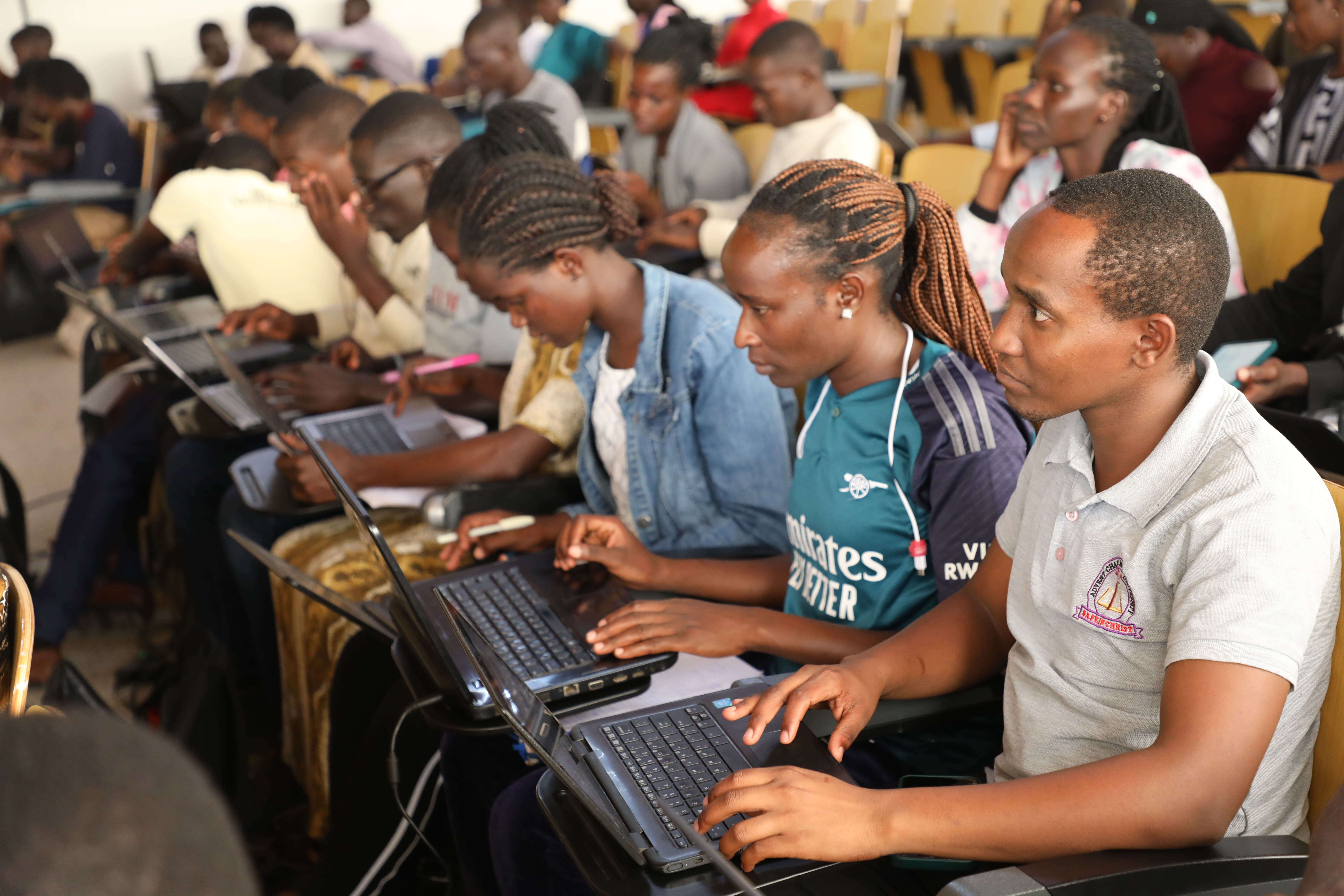
The Library Week celebration also featured a physical training on Data Analysis Using Statistical Package for the Social Sciences (SPSS), specifically for Final Year students, although other students and staff also participated. The training was conducted at the Conference Hall, Faculty of Health Sciences, with the aim of enhancing participants' knowledge and practical skills in managing, analysing, and interpreting research data. The training aimed to equip researchers, students, and academic staff with the competencies required to perform statistical analyses effectively and accurately.
The training adopted a practical and interactive approach, combining presentations, demonstrations, and hands-on exercises. Participants worked with sample datasets to apply the concepts learned during the sessions. Group discussions and question-and-answer sessions were incorporated to reinforce understanding and address challenges encountered during data analysis.
For more information about the library services, please visit our library website